
“The whole is more than the sum of its parts.” (Aristotle)
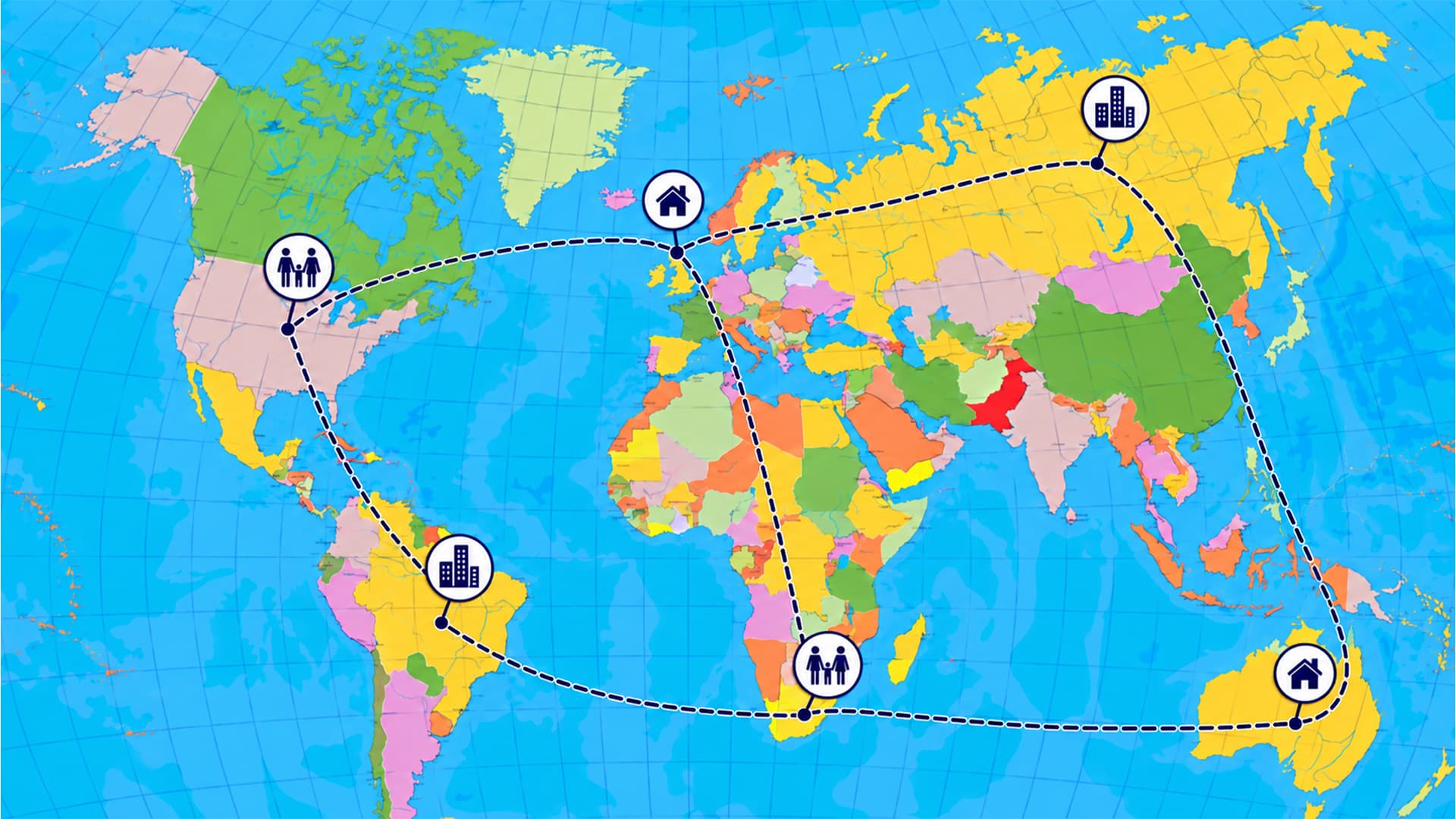
A family may have children studying in London, building businesses in Dubai, holding investments in Switzerland and planning retirement in Australia, while the family trust itself sits in an entirely different jurisdiction.
Structures like these are no longer unusual. Wealth has become increasingly international, and families have also become more geographically dispersed. Different generations may live under different legal systems, tax regimes and cultural influences. Over time, this changes not only how wealth is managed, but the demands placed on those responsible for looking after it.
When wealth crosses borders
International structures can look deceptively simple on paper. A trust may sit at the centre of investment portfolios managed abroad, operating businesses in another country and property holdings spread across several jurisdictions. At the same time, beneficiaries may be building their lives thousands of kilometres apart.
The structure itself may not have changed, but what about the family? A child emigrates. A sister becomes a tax resident in another country. The next generation inherits an interest in the family business. A foreign property is purchased. Gradually, a structure that was entirely appropriate when it was established can become outdated.
For families with international connections, estate and trust planning cannot be regarded as a once‑off exercise.
The era of isolated advice is fading
No single adviser can be an expert in every jurisdiction, tax system, investment environment and family circumstance. International families may require input from financial advisers, trustees, tax specialists, lawyers and succession professionals in several countries.
The difficulty is not necessarily finding good advice, it’s making sure that the advice works together. Depending on your circumstances, we are often well placed to maintain the broader view. We understand your investments, retirement plans, estate‑planning objectives and family circumstances, and can identify when a decision in one area requires specialist input in another.
Where a trust forms part of the plan, we will often work closely with a professional trustee or trust company. The trustee brings specialist fiduciary expertise and responsibility for the trust itself, while we help ensure that the trust is considered within your wider financial affairs.
The exact relationship will differ from family to family. In some cases, a trustee may take a greater coordinating role; in others, we may do so. What matters is that someone retains sight of the whole picture and that the professionals involved communicate with one another.
Stability has a value of its own
International diversification is usually discussed in terms of investments, but globally connected families also need to consider the environment in which their wealth structures operate.
There is no single jurisdiction that will suit every family. You’ve got to consider the family’s particular circumstances, including where its members live, where its assets are held, and what the structure is intended to achieve.
For South African families, this is particularly relevant when children settle abroad or when significant assets are held offshore. Where a wealth structure is located can therefore become part of risk management.
A trust can’t do everything
There is also a part of wealth preservation that no legal structure can manage on its own. Families devote considerable attention to trusts, succession plans, investments and asset‑protection structures. Yet even well‑designed arrangements can come under strain when family members have very different expectations about wealth and the responsibilities that accompany it.
The next generation may inherit the assets without having experienced the years of work, risk or sacrifice that created them. Geographic distance can widen that gap further. A trust can protect assets and determine how they are administered or distributed, but it can’t automatically preserve understanding between generations.
This is where communication and family governance come into play. Families need opportunities to discuss why structures exist, what wealth is intended to achieve, and what responsibilities future beneficiaries may eventually inherit.
Choosing the right trustee
Where a trust is appropriate, choosing the right trustee is an important part of the wider planning process.
Technical competence is the starting point. Trustees carry serious legal and fiduciary responsibilities, and sound administration and compliance are non‑negotiable.
For an internationally connected family, however, experience also matters. Has the trustee dealt with families whose beneficiaries live in different countries? Do they understand the complications that can arise when residency changes? Do they know when an issue falls outside their expertise and requires specialist advice?
Judgement can be harder to assess, but it is equally important. Trustees may have to balance the interests of different beneficiaries, deal with sensitive family circumstances and make decisions whose consequences will only become apparent years later.
Families should also consider continuity. A trust may survive its founder and remain in place for several generations. The relationship is therefore not simply with the individual sitting across the table today, but with the organisation and people who may eventually take their place.
If your family spans multiple jurisdictions
If you have family members living in different countries, or assets held across borders, we can help you assess whether your current structures still serve their intended purpose. And we can assist you in selecting a suitable trust company if needed.
Disclaimer: The information provided herein should not be used or relied on as professional advice. No liability can be accepted for any errors or omissions nor for any loss or damage arising from reliance upon any information herein. Always contact us for specific and detailed advice.
© FinDotNews